Discover a Different Approach to Depression Treatment
Noninvasive. No anesthesia. A new option when antidepressant medications haven't provided enough relief.
Living with depression can affect nearly every aspect of your life, from your energy and motivation to your relationships, work, and overall well-being.
At Symbios Integrative Health, we understand that traditional treatments don’t work the same way for everyone.
That’s why we’re introducing Magstim Transcranial Magnetic Stimulation (TMS), an innovative, noninvasive approach to treating major depressive disorder.
Call (469) 983-1300 to learn more or request a consultation.
What Is Transcranial Magnetic Stimulation (TMS)?
Transcranial Magnetic Stimulation, commonly called TMS, is an FDA-cleared, noninvasive treatment for certain patients with major depressive disorder (MDD).
TMS uses focused magnetic pulses to stimulate nerve cells in areas of the brain involved in mood regulation.
Unlike medications that circulate throughout the body, TMS delivers stimulation directly to targeted brain regions.
The procedure does not require surgery, sedation, or anesthesia. Patients remain awake and alert throughout treatment and can typically return to normal daily activities afterward.
TMS is generally considered when antidepressant medications have not provided satisfactory improvement.
How Does Magstim TMS Work?
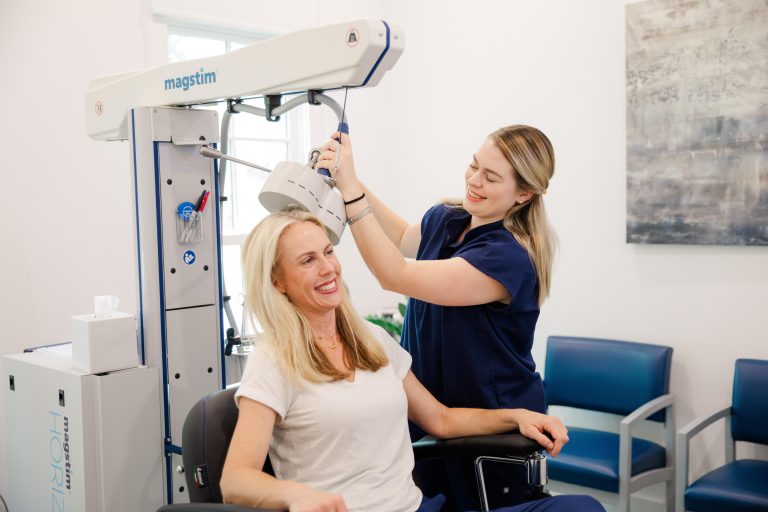
Magstim technology uses an electromagnetic coil positioned against the patient’s scalp. The coil delivers precisely controlled magnetic pulses to targeted areas of the brain.
These pulses stimulate neural activity in brain circuits associated with mood regulation.
A typical treatment experience includes:
Initial Evaluation: A qualified healthcare professional reviews your medical history, depression symptoms, prior treatments, and potential safety concerns.
Personalized Treatment Planning: The clinical team determines appropriate stimulation settings and treatment targets.
Comfortable Outpatient Sessions: You sit in a treatment chair while the magnetic coil is positioned against your head.
Targeted Magnetic Stimulation: You may hear clicking sounds and feel a tapping sensation during treatment.
Return to Daily Activities: Most patients can resume their usual activities immediately after each appointment.
Treatment duration and the number of sessions vary based on the prescribed protocol and individual response.
Benefits of TMS Therapy
TMS offers several potential advantages for eligible patients:
Noninvasive treatment: No incisions, injections, or implanted devices.
No anesthesia required: Patients remain awake throughout treatment.
Medication-free procedure: The treatment itself does not involve administering medication.
Outpatient convenience: No hospital stay is required.
Minimal interruption to daily life: Most patients can return to normal activities after treatment.
An established treatment option: TMS has been studied extensively for depression and may help patients who have not responded adequately to antidepressants.
TMS can be used as part of a broader mental health treatment plan. Patients should not discontinue prescribed medications without consulting their healthcare provider.
Who May Benefit From TMS?
TMS may be appropriate for individuals who:
Have been diagnosed with major depressive disorder.
Have experienced insufficient improvement with antidepressant medication.
Have difficulty tolerating certain medication side effects.
Are interested in discussing noninvasive treatment alternatives.
Have been evaluated and determined to be suitable candidates by a qualified clinician.
Not everyone is eligible for TMS. A medical screening is necessary to determine whether the treatment is appropriate and safe.
Supporting Veterans and First Responders
Veterans Treating Veterans
At Symbios Integrative Health, serving those who have served is central to our mission.
We understand that veterans and first responders may experience significant mental health challenges and that finding effective, accessible treatment can be difficult.
Our veteran-focused approach emphasizes individualized care, respect, and understanding.
For veterans experiencing major depressive disorder, TMS may offer another treatment option when traditional approaches have not provided adequate relief.
Although TMS is being studied for additional mental health conditions, it should not be presented as an established treatment for PTSD or traumatic brain injury.
VA Community Care
Symbios Integrative Health works with eligible veterans through the VA Community Care Network.
Veterans interested in TMS can contact our office to discuss treatment availability, referral requirements, and whether the proposed service may be authorized through VA Community Care.
VA authorization and coverage must be confirmed before treatment.
What to Expect During TMS Treatment
Before Treatment
Your clinical team reviews your medical history, symptoms, current medications, previous treatments, and any factors that may affect your eligibility.
During Treatment
You’ll sit comfortably while the TMS coil delivers magnetic pulses. You may hear clicking sounds and feel tapping on your scalp. Ear protection is generally provided.
After Treatment
There is typically no recovery period. Most patients can drive themselves home and resume their normal routine.
Over the Treatment Course
TMS commonly involves sessions five days per week for approximately four to six weeks, although schedules vary by treatment protocol.
Improvement may occur gradually. Some patients notice changes earlier, while others require more sessions. Results are not guaranteed.
Is TMS Safe?
TMS has an established clinical safety record when administered to appropriately screened patients by trained professionals.
Common side effects may include temporary headache, scalp discomfort, or facial muscle twitching during treatment.
Less common but more serious risks include seizures, hearing problems if adequate ear protection is not used, and mood changes, including mania in susceptible individuals.
Patients with certain implanted medical devices or metal objects in or near the head may not be eligible. A history of seizures or other medical conditions may also require special evaluation.
Your healthcare provider will review the potential benefits and risks before treatment.
Frequently Asked Questions
Does TMS hurt?
Most patients tolerate treatment well. Some experience tapping sensations, scalp discomfort, or headaches, particularly during early sessions.
Will I be awake during treatment?
Yes. TMS does not require anesthesia or sedation.
How long does each appointment take?
Treatment time depends on the specific protocol. Some sessions last only a few minutes, while others take longer.
How many treatments will I need?
A typical course may involve approximately 20 to 36 sessions, depending on the prescribed treatment plan.
Can I continue taking antidepressants?
In many cases, yes. Your healthcare provider will determine how TMS fits into your existing treatment plan.
Does TMS work for everyone?
No. Many patients experience meaningful improvement, but results vary. Some patients do not respond to treatment.
Is TMS covered by insurance?
Many insurance plans cover TMS for eligible patients with major depressive disorder, subject to medical necessity criteria, prior authorization, and plan requirements. Our office can help you understand the verification process.
Can veterans receive TMS through VA Community Care?
Potentially. Eligibility depends on the patient’s circumstances, referral, clinical appropriateness, and VA authorization for the specific service.
Take the Next Step Toward Better Mental Health
You deserve access to treatment options that address your individual needs.
If depression continues to affect your quality of life despite previous treatment, Magstim TMS may be worth discussing with a qualified healthcare professional.
Contact Symbios Integrative Health to learn more about TMS, the evaluation process, and available treatment options.
Symbios Integrative Health
1420 W. Mockingbird Lane, Suite 105
Dallas, TX 75247
Phone: (469) 983-1300
Website: www.SymbiosCCN.com
Request a Consultation Today
Medical Disclaimer: Information on this page is provided for educational purposes and does not replace professional medical advice, diagnosis, or treatment. TMS eligibility, benefits, risks, and outcomes vary by patient. All treatment decisions should be made in consultation with a qualified healthcare professional.